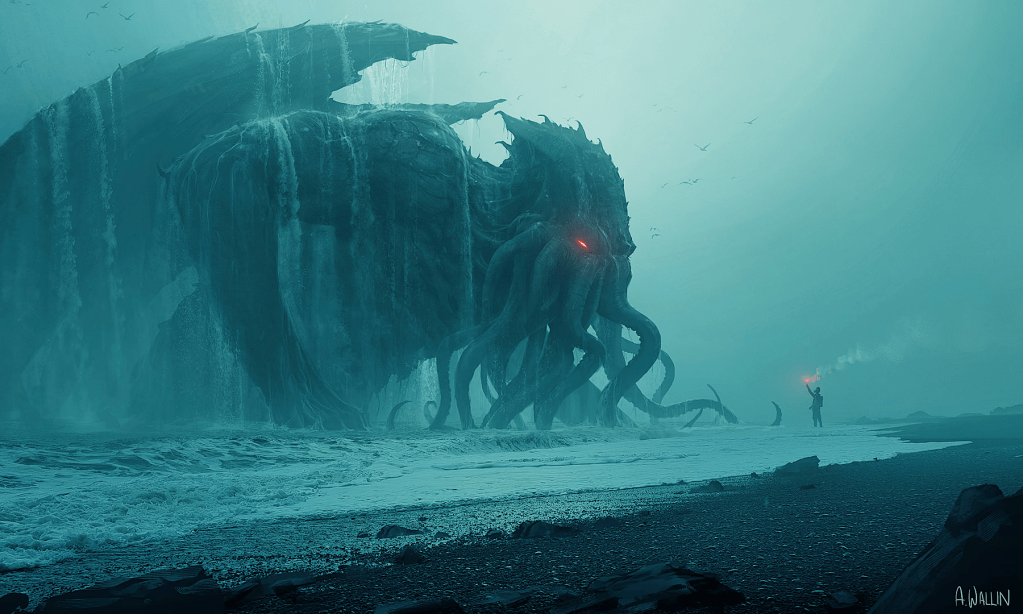
In the scattered debris of our contemporaneous existence in this most heinous chthulucene, we are too often fractured asunder. The planet, spinning like a forgotten top on the edge of ruin, its centrifugal force pushes us to despair. From the quasar-flecked heavens to the quarks evading detection in our nuclei, an interminable rupture has seeped into the very lattice of what we once experienced as a unitary reality. Yet, herein lies the first lesson: fracture is not the enemy.
The tyranny of capital is so omnipresent that we have grown fond of the seamless, the smooth illusions of wholeness, that we’ve forgotten the art of living in piecemeality. The seamless world proffered through our interface envelopes is a world we perhaps once pined for where the eocnomy flows uninterrupted by borders, politics is sane, civil and moderate, where justice rises with the dawn and goes to sleep with a full stomach; but this was always a myth formulated in the fires of the Spectacle. Its fault lines were always just beneath the surface, hidden by the lustrous and blinding sheen of progress. But now, as the climate catastrophises, economies falter and flatline, identities fragment, cultures war, and the Other screams at our door, we stand in the wreckage of that fantasy, disoriented and bewildered.
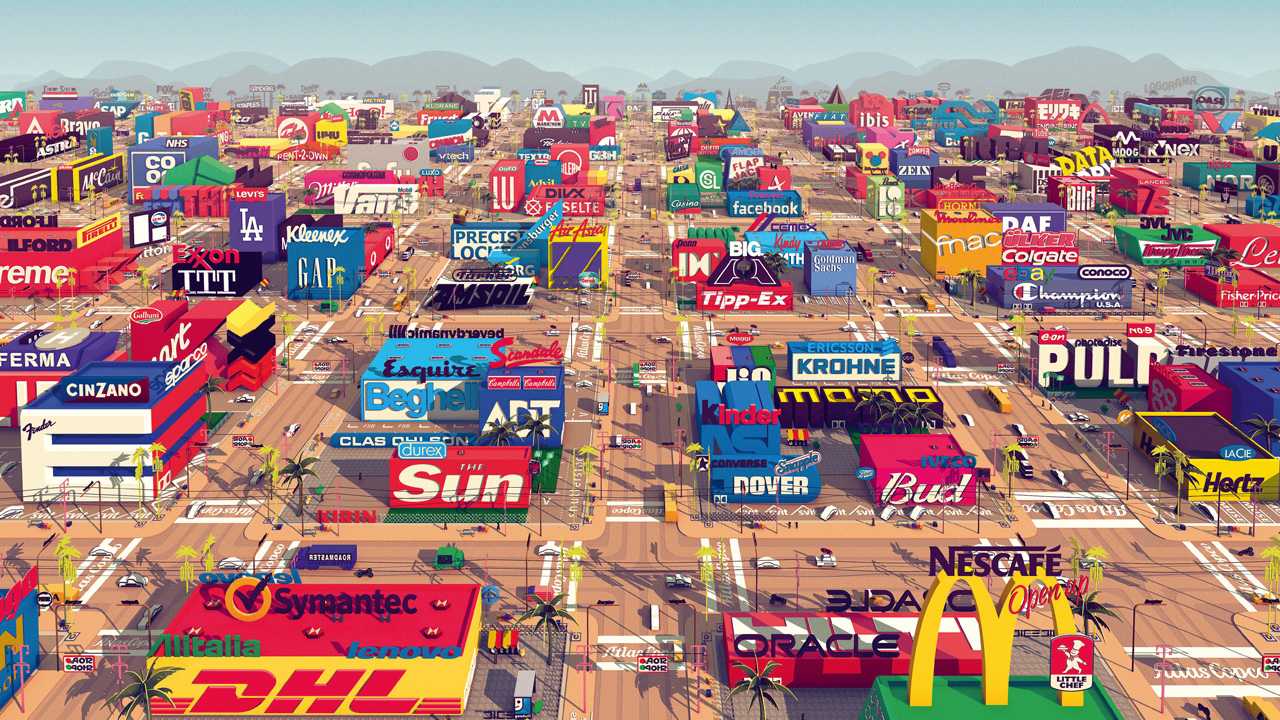
Yet, as we gaze into the yawning void of uncertainty, we can hold onto a hope: not just one but several. A hope that is a courageous, deliberate embrace of the fragmented planetarity. It is the way we hold brokenness not as the end of something we’ve lost, but as the beginning of something we’re building. In this hope, we glimpse the heart of a spirit (no, not a blind optimism) which is the steadfast belief in how within the debris of destruction, new and reemergent forms of life, of cooperation, of relationality, of experience, or alternatives, can thrive.
We are too often lectured and indoctirnated by power that the world is too complex to be saved by small gestures. But complexity needn’t be a prison; it can be an architect, a planner, perhaps even a technocrat of our salvation. The dense webs of life, fragile yet unbreakable in their intermeshing, teaches us that it is the smallest of things – a seed, a breath, a material touch of love – that rebuilds the future without a crumb of the obdurate and oppressive present . In each subtle gesture, there is a defiance against the despair, a declaration that the world, though shattered by the chase for capital, is still fertile with radical possibilities.
One only has to look up at the ubiquitous spectre of climate collapse, and the conflagration of social anxiety among a petrified planetary body politic it has sparked (that is only matched by the wildfires reflected in their moistened corneas). We speak in tones of apocalypse, of the ending of days. Yet, to live in hope is to understand that even as one way of being in the world dies, others are being born; there is a natality within eschatology. Across the globe, people are rediscovering how to be nature (again) rather than over it (before). They are carving out old symbioses with the e/Earth, not through grand revolutionary movements, but through the slow, patient work of rewilding, of regenerative agriculture, of seeding solarpunk futures. This is not the triumph of the human will over nature, but the gentle, almost invisible reweaving of a tapestry torn apart by the elite as they war over how best to exploit that which sustains them. It is in this reweaving that the future lies, delicate, collective and strong.
And what of our social and political fractures? Everywhere we see, and create new divisions: of class, race, gender, religion, ability and ideology. The temptation is to build higher and sharper walls, to retreat into smaller and smaller circles of safety and point crocked fingers (and genocidal smoking barrels) at the Other. But hope insists otherwise. It asks us to sit with our discomfort, to hold the tension between opposites, to stay with the trouble, and to be willing to stand in the spaces where the edges of the self flow with the Other. It is not a comfortable place to be, but it is a, perhaps the only, place of reconciliation.
In these fractured spaces, we can act out creative and different futures, performed not in perfect unison or with any professionalism, but in the rough, amateur, proletarian, dissonant harmony of difference. A performance that is not a return to a nostalgic past, but a co-creation of a realised future where every voice soars, even the ones we struggle to hear with the deficient legacies of the capitalist status quo. In these worlds between the World, power is not about dominance, but about resonance; the capacity to vibrate in tune with those who are unlike us, to amplify each other’s strengths and hold each other’s vulnerabilities with care and turn them into opportunities for betterment.

Hope is not a fleeting fancy. It is a revolutionary praxis. It is a way of being in the world that leans into the cracks and edges, that sees the sublime in the jagged, that understands that every end is simply an exhale before another inhale. This is not naive optimism, but a deeper, more mature faith that comes from walking through the fire and finding, on the other side, not ruins but seedlings.
We are a species of contradiction, and it is time we accepted this fact not with resignation, but with hope, even joy. In our contradictions, in our brokenness, there is a transcendent grace. The future is not something that will be delivered to us by some external saviour, rapture or some immaculate birth of a technological fix. It is something we build in the quiet small spaces of our own fractured lives, with hands calloused from tending to the dusty but fertile soil that capital has left behind.
And so, to the reader who feels the weight of that capital bearing down on their scarred shoulders, I say: let it crack you open. Let the heaviness give way to a thousand pieces of hopeful light. For in this fragmentation, you will find not only despair, but also the seeds of alternate beginnings, the frayed threads of connection that, when woven back together, create a post-capitalist mosaic more beautiful than anything whole ever could be.
 taCity
Leave a comment