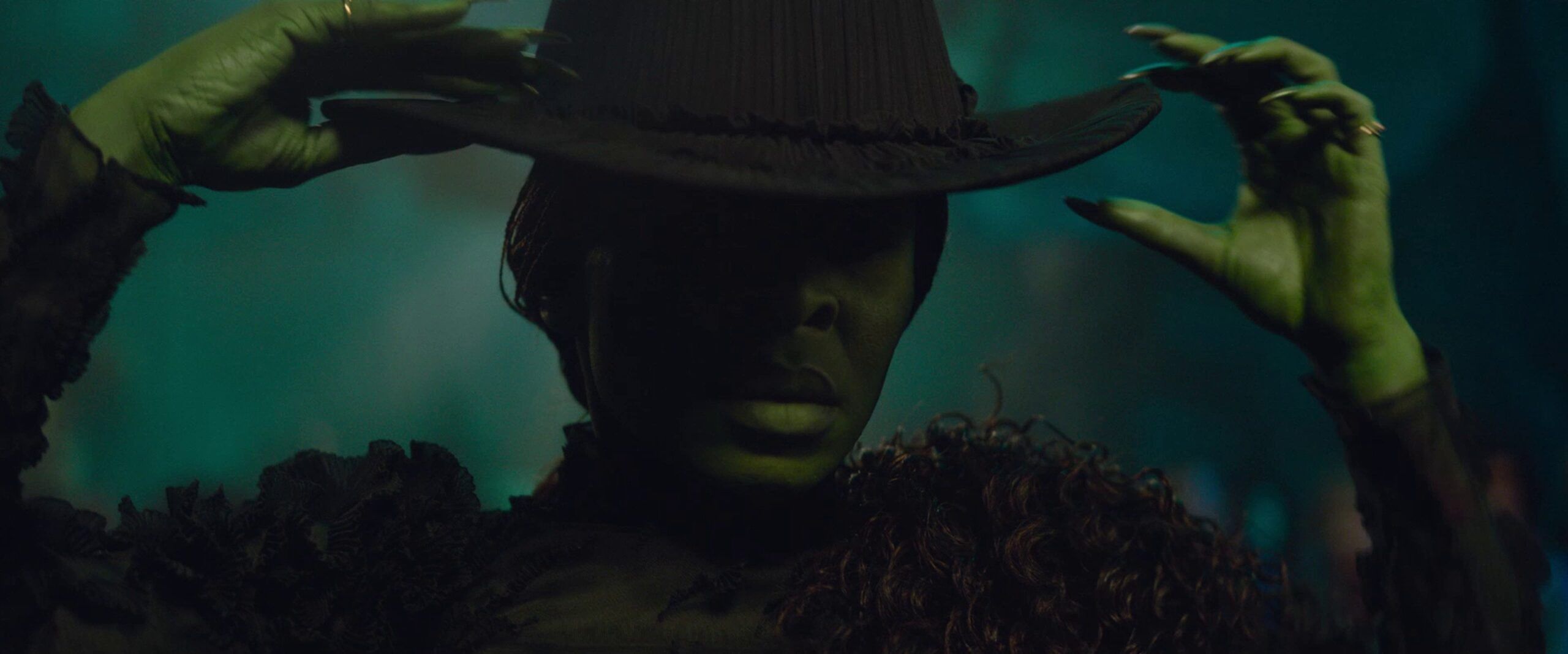
I’m not a big fan of musicals, but my kids really wanted to watch the new film Wicked so off we went to see the Wizard. Upon leaving the cinema though I admit to not just being taken in by the emotive, searing musical numbers, and the glittering and quite wonderful steampunk aesthetic. I was also thinking about how the film was a tender, charged, and unmistakably queer sapphic love story that to me, spoke to the tumultuous personal histories of queerness and its associated resistance. There have been plenty of words penned about this, with most coming from authors far more qualified than me to pick up on the nuances, but even as a cishet white male, the allegories were very stark and smacked me square in the face, pretty much from the opening scene.
***Warning – mild spoliers ahead***
The film is set on the stage musical, itself based on a novel written in 1995. It that tells the back story of the ‘Wicked Witch of the West’(named Elphaba) from the 1939 film ‘The Wizard of Oz’ (itself a film that is very much in the queer canon), and her ‘friend’ Glinda. Without boring you with the plot, essentially the story’s core has Glinda as privileged white woman (played by Ariana Grande in a spot of perfect casting) becoming friends with the “exotic” and terribly Othered Elphaba (Cynthia Erivo) at university; I mean, they reference her green skin from the outset, and it doesn’t take a media studies professor to see that this is a very thin veil for Blackness.
I say they ‘become friends’, but it’s very clear that their relationship is an allegory of their sapphic relation, and the scene in the bedroom is rich with queer, sexual semiotics and positional innuendoes. And the scene before, they’re basically courting each other in the dancehall like mating birds. And indeed, all this happens at a university, a place that after all, has long been a sanctuary for many queer individuals, a place where identities are explored, challenged, and solidified.
Their budding relationship, tender yet fraught with tension, is a clear commentary on the intersection of desire and societal expectation. Because Glinda’s hesitation to fully embrace Elphaba and her queer identity out of fear of reprisal and loss of social privilege echoes the struggles of many queer people throughout history, rupturing most violently of course during the Stonewall riots in New York in 1969.
After some more drawn-out (and slightly boring) plot devices, the lov…sorry, friends arrive in Emerald City, the queer subtext takes on a shimmering urban clarity. The city cruises utopia: it’s joyous queerness, the way it embraces spectacle, flamboyance, and diversity, feels like a nod to queer enclaves of resistance and celebration, from Greenwich Village to ballroom culture via the Notting Hill Carnival. Notably, nearly every dancer in the Emerald City sequences is Black, underscoring the parallels between queerness and Blackness as intersectional forms of urban Otherness. The city becomes a utopia of acceptance and liberation, so intoxicating that Glinda and Elphaba consider staying there forever (or so they sing).
But, as always, utopia is fleeting. Enter the Wizard, a patriarchal, authoritarian figure whose every word drips with fascistic intent. His declaration, “The best way to bring folks together is to give them a real good enemy” might as well be lifted straight from Project 2025. His role as the enforcer of heteronormativity and racialized hierarchy in Oz mirrors the function of the police state during Stonewall and beyond. And watching the phallic battering ram smash through doors as the guards try to capture Elphaba, I couldn’t help but laugh. I mean, it wasn’t a particularly subtle reference at all.

So in the finale, when Glinda and Elphaba finally choose to embrace their queerness together and attempt a different future, their triumph is short-lived. Glinda is ultimately pulled back into the world of privilege and heteronormativity first violently by the Wizard’s police guards, then by her matriarchal obligations, while Elphaba is left to fend for herself, a Black, queer witch wielding her newfound superpower (and she may or may not throw a brick…)
It was also very unsubtle that the film’s injustice vehicle was that of the animals losing their voices: queer people throughout history have been silenced, ostracized, erased, and stripped of their agency. Elphaba’s determination to fight for the animals becomes a parallel to queer activism, a defiant stance against the systems of oppression that seek to render marginalized voices invisible.
As a film, Wicked (2024) is…fine. It’s too long and drags in places, but the cast delivers excellent performances, and the steampunk aesthetic is a visual treat (the train is amazing). Yet, what elevates this adaptation is the unapologetic queer subtext coursing through its veins. This is a sapphic love story and a revolutionary tale, an allegory of the Stonewall spirit where joy, resistance, and heartbreak collide.
 taCity
Leave a comment