
The spectre of fascism that once loomed with unsettling persistence, has now firmly taken root in the American heartland. While it was always present for some, it is now the politics for all. The question of how to resist it is not merely academic but essential.
Fascism, as history and theory remind us, thrives on the intensification of those processes that capitalism initiates: the suppression of complexity, the flattening of difference, and the commodification of desire. Fascism is a politics of scarcity: scarcity of thought, of intelligence, of empathy, of radical possibility. It offers nothing other than homogeneity and anyone who errs from it, is violently removed.
Against this fascist obdurateness, I propose an antidote that is as counterintuitive as it is necessary: the embrace of excess. Not the excess of material accumulation under capitalism, which fuels the very rampant commercialism that fascism often cloaks itself in, but the excess of life experiences: those collective, transcendent moments that overflow the boundaries of the individual self and connect us to something greater. I have written elsewhere how this excess is necessarily psychedelic, but not just in the narcotic sense. It is the excess of the football stadium’s roar, the concert’s collective euphoria, the spiritual ecstasy of communal ritual, or even the mediated intimacy of a shared cultural moment. I am currently reading Dan Hancox’s wonderful new book Multitudes, and there is a sense that the very essence of the crowds – which he argues are the ultimate force for change in that they exude conviviality, euphoria, mass culture and democracy – are indeed also psychedelic.
These collective (and indeed sometimes individual) experiences, often dismissed as frivolous or escapist, are in fact the very sites where the desire for connection and meaning can be cultivated as a bulwark against the authoritarian impulse. Is it any wonder that some of the most impulsive policies of fascist governments is to violently police crowds.
Excess Desire
To understand why such excess matters, we must first dissect the relationship between desire and fascism. Fascism, as Deleuze and Guattari have so vehemently argued, is not merely a political system but a psychological one. It thrives on the manipulation of desire, redirecting it toward authoritarian figures, nationalist myths, and consumerist fantasies (such as Making America Great Again). Capitalism, with its promise of the fulfilment of desire through acquisition, is a key accomplice in this process. It conceptualises desire as a lack; a lack that can only be fulfilled by the market and a transactional equation, offering the illusion of satisfaction while perpetuating a cycle of lack. The fascist subject, in this sense, is one whose desires have been interpellated and channelled into the pursuit of power, purity, or products, rather than the messy, uncontainable richness of life itself.
Enter the concept of excess. By excess, I do not mean hedonistic indulgence in the superficial or the gratuitous, but rather the pursuit of experiences that exceed the narrow confines of the experiences of the self and worse, the market. These are moments of collective effervescence (to borrow a term from Durkheim), where individuality dissolves into a shared, collective intensity of feeling. Think of the way a crowd sways in unison at a concert, or the collective cheer in a stadium when your team scores (particular when they don’t score many). These are not merely distractions; they are profound assertions of human connection. They instruct us that desire need not be tethered to the acquisition of stuff, but can instead be directed toward the creation of shared meaning. After all Deleuze and Guattari call it desire-production.
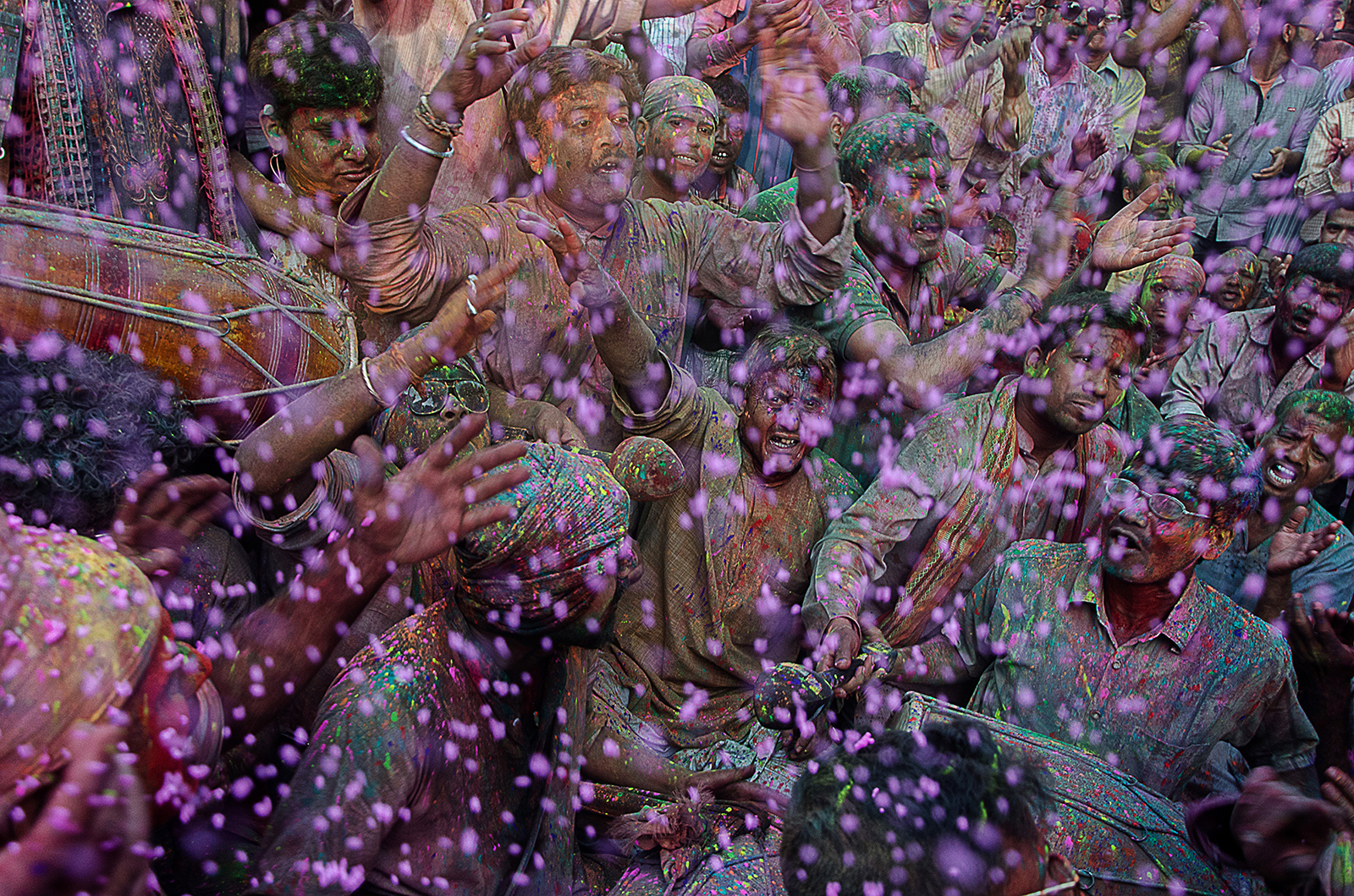
The power of such psychedelic experiences lies in their ability to disrupt the logic of scarcity that fascism depends on. Fascism insists that there is never enough; not enough security, not enough purity, not enough belonging. There is always another enemy to name. It thrives on fear and division, convincing us that our innate desires can only be met at the expense of others and submission to the authoritarian ruler, even if that means losing your own life. But the excess of psychedelic collective experience offers a different narrative. In the throngs of a crowd or the depths of a spiritual practice, we encounter a plenitude that cannot be commodified or hoarded. It is a reminder that the self is not a fortress to be defended, but a site of endless possibility, always spilling over into the world and into others.
Psychedelic Collectivities
This is not to romanticize such moments as inherently revolutionary. After all, fascism itself has often co-opted collective fervour for its own ends, as January 6th demonstrated. But the difference lies in the nature of the desire being mobilized. Fascist collectivity is exclusionary, rooted in the fear of the Other and the fantasy of racial purity. Essentially. Jan 6th demonstrated how easily the microfascisms that reside in all of us can be manipulated easily by someone willing to disregard the fragile (and hard-won) social and political norms of democracy, decency and truth in favour of an outright power grab. Instead, the psychedelic excess I am describing is inclusive and expansive. It is the desire not for subservience to dominant ‘transcendent’ desire that is prescribed to us, but for connection and a desire that, when nurtured, can erode the foundations of authoritarianism because it stems from all of us, by simply being together. This is the kind of desire that can counter the pull of fascism: a desire not for more things, but for more life.
The resurgence of interest in spirituality and mindfulness in recent years can be seen as a response to the alienation of commercialism. And while yes, it has been hijacked by an appropriative capitalism into the pernicious ‘wellness industry’, practices like meditation, yoga, or communal worship can offer a different kind of excess of presence, of awareness, of connection to something beyond the self: a psychedelic excess. These practices do not promise any material gain, but rather a deepening of experience of our own collective materiality. They remind us that the self is not a fixed closed entity to be defended, violently if needed, but a fluid process to be explored.
Ultimately, the embrace of excess is not a call for hedonism, but for a reorientation of desire – a recapture of desire from the clutches of capitalist commodification and subsequently fascist homogenisation. It is a recognition that the antidote to fascism lies not in the suppression of desire, but in its redirection away from the narrow confines of a marketized logic toward the boundless possibilities of human connection. In the words of the poet and Black feminist activist Audre Lorde (when discussing the power of the ‘erotic’ which could easily be thought of as form of psychedelic experience), “the sharing of joy, whether physical, emotional, psychic, or intellectual, forms a bridge between the sharers which can be the basis for understanding much of what is not shared between them, and lessens the threat of their difference.” It is this bridge that we must build, one collective experience at a time. For in the excess of life, we find not only the means to resist fascism, but the promise of a more vibrant, connected world.
 taCity

Leave a comment