An activist-academic, as the literature outlines, at its most basic is a scholar who actively engages in social and political issues while pursuing academic research and teaching. Much of this literature stems from the radical continental philosophies of the 60s and 70s, Paulo Friere’s ‘Pedegogy of the Oppressed’ is perhaps a key text. But also of massive influence is the American civil rights movement and the broader Black tradition of scholarship that foregrounds resistance, activism and justice within the foundations of theory building. Perhaps one of the more famous lines from Audrey Lorde being “The Master’s Tools Will Never Dismantle the Master’s House” – which became a bedrock slogan of black anarcho-feminism in the 80s and 90s.
So essentially, academic activism, as the phrase would suggest combines scholarly expertise with expressed activist goals and social justice advocacy, broadly defined (although arguably, that broadening of the definitional boundaries over the years has been to its detriment).
Other important characteristics include it’s interdisciplinary engagement, although this often comes from the work rather than a pretext to it. It’s very difficult to ‘set up’ the disciplinary boundaries of activist research beforehand, given it’s very open-ended and explorative nature. That said, research agendas can be formulated, conextualised and mapped of course, but the methodology and indeed the ‘messiness’ of the analysis doesn’t really fit neatly with the rather constricted disciplinary boundaries that the academy has formulated over the centuries.
Additionally, creative work – specifically the outputs – seem to overly dominate the landscape of activist research. And notably, more subcultural creative activity, such as ‘zines, iDocs and more DIY-looking creative practices proliferate given it often aligns more neatly with the overall theoretical mindset of activist scholarship.
And finally – and perhaps most importantly – the whole research process foregrounds an ethical responsibility to foreground your own positionality. There must be a strong focus on what the researcher or researchers ‘bring’ to the project – what social identities, what biases, what privileges, what preconceptions etc. The idea is not necessarily to dampen them, but to make them a part of the research methodology. And crucially to not use these parameters to ‘filter’ any voices or practices captured by the methods. Research is always a process of filtering reality into a narrative, but with academic activism, this ‘filtering’ process is highlighted as much as possible so as to therefore attempt to give as much context to the voices of the participants. In so doing, the aim is to attempt to roll back the agency of the academy’s part of academic activism. This can never, or very rarely, be rolled back to zero, but foregrounding this process of rolling back in the methods and conceptual analysis is vital.
An Academy in Turmoil?
Why is all this necessary or perhaps why is it ‘growing’? You won’t need me to tell you the academy is currently in somewhat of a crisis. Academics like me work in a sector that is under increasing scrutiny from governments influenced by nefarious ideologies of ‘free speech’ (whatever that has come to mean in political discourse) and a public opinion of suspicion. Here in the UK, we recently heard from the universities minister Michelle Donelan about the wonderful new ‘Freedom of Speech’ bill where she said: “We are putting pen to paper in legislative action to once and for all challenge the forces that shut debate down. We are standing up for free speech and the open exchange of ideas in our universities like never before.”
But other pressures that perhaps are bundled into that is the increasing corporatization and marketisation of the sector a broader function of the rampant neoliberalisation of our society, the results of which we’re currently having to work through via the marking and assessment boycott. But more generally, this creeping neoliberaliastion and perhaps institutionalization of the academy is – managerially at least – blunting the ability of academics to engage in truly radical activist work (in the Paulo Friere and Audrey Lorde tradition).
Then of course over the last year or so, the surge of the competence and availability of AI is going to, if it is hasn’t already, radically changed the pedagogy of higher education, but will also have huge impacts of research – perhaps not in practice but certainly with conceptualization, analysis and even peer review process.
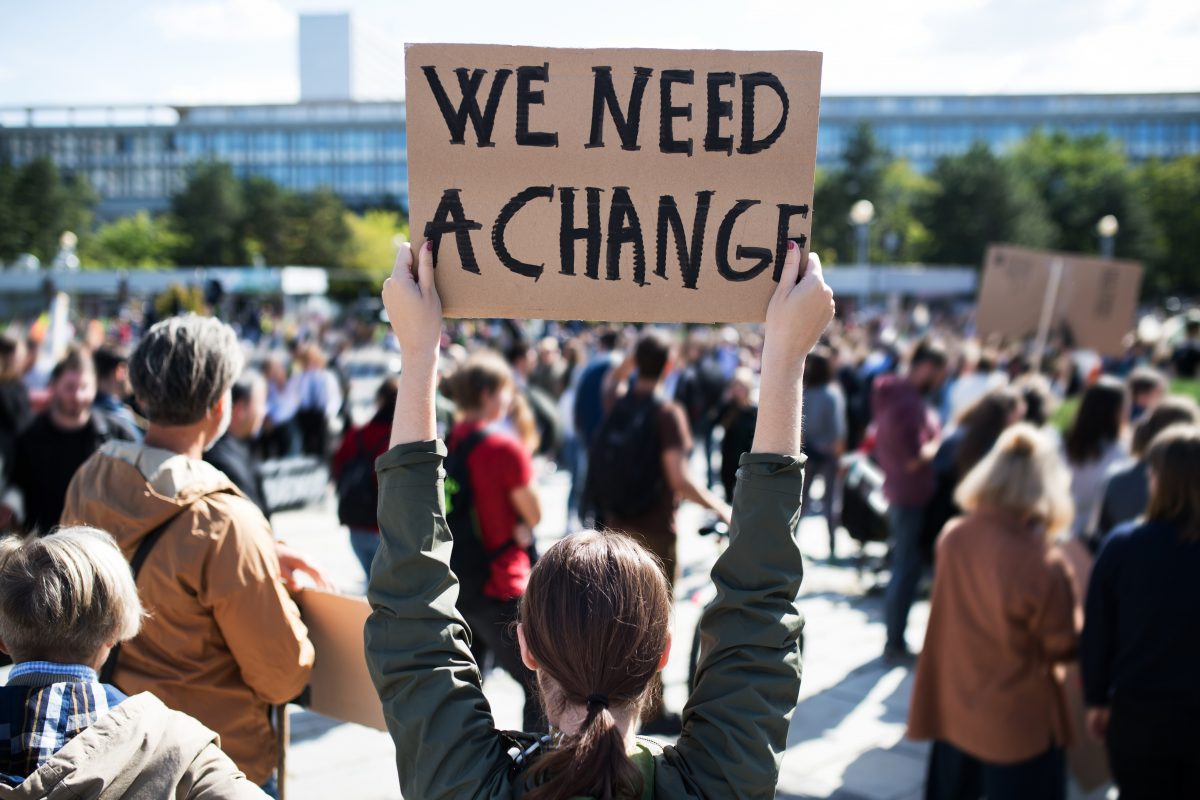
And on the other side of that phrase – academic-activism – we see growing activism around the world, particularly with those who benefit most from the ‘outputs’ of our research, our students, the young, generation Z. Indeed, Global data from public-relations and research firm Edelman shows 70% of Gen Zers are involved in a social or political cause: from online campaigning to actively marching in the streets to lying down in front of traffic. Clearly the causes of this is not for this post, but suffice to say, with the rampant inequality we see in the world, climate catastrophe and a general lowering of living standards, it is any wonder that we see research says that young people’s faith in democratic politics is now lower than any other age group, and it’s at it’s lowest for a generation.
Academic-Activism: An oxymoron?
So with this growing disparity between the institutionalization of the academy on the one hand, and the rise in activism on the other, is the phrase ‘activist-academic’ a bit of an oxymoron? Are they compatible? As an academic, you are both of this multi-million dollar, and yes, quite neoliberalisation institution, but also trying to fight against the very same processes that shaped it. It’s an invidious position for sure.
A fellow activist geographer Michele Lacione – who is a housing activist in and around Eastern Europe but also a professor of economic and political geography in the Department of Regional and Urban Studies and Planning in Turin (I give the full title in order to evidence the institiutionalisation at play here) – he writes about this tension arguing that its quote “too easy to claim to be an activist ‘out there’, but to fail to look at the structures that you work within.” There’s lots more to unpick here of course, but I find this a useful starting point: to start ‘at home’ as they say: and as Donna Haraway would say, to ‘stay with the trouble’. This ultimately from a methodological point and ethical position, and means including your voice as one of many that seek to challenge these broader institutional and ideological shifts.
Academic-activism is a balancing act between knowing your context as an institutionalized researcher, and the social justice advocacy being employed.
To walk this tightrope, the ethical consideration is crucial to protect and/or give a platform to the campaign, cause or issue being researched. If you don’t bring your own positionality, privileges, prosperities and indeed your paucity into the research arena, then we only ever do research on people, rather than with them.
Building networks and coalitions that last are critical (not “parachuting” in). Taking time to building these up was crucial, and a lot of the ‘research’ was done simply living with them, being with them and listening: essentially shrugging off the coat of researcher for a bit, and simply becoming their friends.
‘Public’ dissemination that reaches the marginal voices and those unable to pay to get access to academic journals is vital, so it’s important to think about language, format and accessibility first, and academic prestige a distant second.
Suffice to say, being an academic-activist and conducting academic research is messy, often full of contradictions and can ultimately leave you vulnerable to accusations of hypocrisy. This is sad, but it is part and parcel of being someone – or being a group of people – who are looking to maintain the activist and social justice potential of the academy alive. It is part of being and embodying the hyphen of the academic-activist; being that link, living with the tension, living with the trouble.
 taCity
Leave a comment