Everyone my age will remember where they were on 9/11. I distinctly remember the BBC stopping a lunchtime episode of Neighbours for it, so I immediately knew something big was happening.
As the day turned into a week, which turned into a month, which turned into a new epoch of geopolitical tensions in, and the intensification of, the ‘permawar’ in the Middle East, it became clear that the tragic events of September 11, 2001, left an indelible mark on the cultural imagination of the United States. Much has been written about the superhero cinematic genre and the comic books from which they are gleaned as aiding in constructing new Imperialist imaginaries of the US (helped considerably by the financial weight of the US military funding these films), but for me, the post-911 cultural landscape of the US fictional media played out fascinatingly on TV. Indeed, the stark differentiation of US politics in the immediate aftermath of 9/11 can be brilliantly encapsulated by examining three seminal television shows of the era: 24, The West Wing, and The Wire. These cultural artifacts – all brilliant in their own way – reflect and shape vastly different political narratives that emerged during this transformative period, and offer a microcosm of the ideological battleground that defined post-9/11 America, and perhaps laid the groundwork for the politics of the US nearly a quarter of a century later.
24: Right-wing Militarized Nationalism

Jack Bauer – a fictional protagonist who became emblematic of post-9/11 American fears and fantasies – was the hammer for a nation convinced every problem was a nail. Speak to any of my friends at university and they’ll tell you we were hooked from episode 1. 24 was a masterpiece of frenetic pacing and manufactured urgency, portraying a world where existential threats are perpetual and ubiquitous, and the only recourse is ruthless and violent efficiency. Its ethos mirrored the rise of Bush right-wing militarized jingoism, where the lines between patriotism and authoritarianism blurred under the banner of national security (not least with the controversies surrounding the Patriot Act of 2001).
The show’s intense and looking back, pretty nasty Islamophobia (which was often cloaked in narrative pragmatism) amplified fears of the Other while subtly stoking the fires of American exceptionalism and stereotypes of terrorist activity. The series presented terrorism not as a socio-political phenomenon, but as a moral evil requiring pre-emptive violence. In the mind of the ubermensch Jack Bauer, the ends always justified the means, a philosophy that justified torture, surveillance, and extrajudicial killings; all in the name of preserving the Homeland. Yet, as the seasons progressed, 24 morphed into a future fascination with conspiratorial deep-stateism. The depiction of shadowy cabals that controlled the world, and rogue government elements reflected a growing cynicism within right wing circles, seeding the political paranoia that would later flourish in the Tea Party, and now the QAnon movements. In addition, I distinctly remember the TV film version, called ‘24: Redemption’, painted the United Nations as useless, partisan and generally an enemy of the US. All in all, 24 could said to have narrated the ideological bridge between intense militarised nationalism and a fear of anyone not white as an Other to be feared that manifest so readily post-911, and the conspiratorial, anti-intellectualism of Trump 2.0.
The West Wing: Centrist Liberalism and the Fetishization of the Rule of Law

So while 24 may have rallied the hawks, The West Wing served perhaps as a soothing balm for liberals yearning for competence and civility. Premiering in 1999, Aaron Sorkin’s fast-talking idealists roamed the hallowed halls of the White House, drafting legislation with a quip and a wry smile (and some incredibly cheesy, but very haughty dialogue). At its core, The West Wing was a love letter to the insipidness that is the centrist liberalism of American nationalism, where policy disagreements were resolvable through eloquent debate and the machinery of democracy was inherently just (and Capitol insurrections were a thing of extreme fiction).
The fetishization of the rule of law and procedural democracy in The West Wing offered a comforting fiction in the chaotic post-9/11 world. By prioritizing decorum over radical reform, the show reaffirmed faith in traditional institutions that, in reality, were grappling with moral and legal crises such as the Patriot Act and the Iraq War. Its idealized portrayal of American governance often skirted the deeper contradictions of liberalism, such as its complicity in neoliberal globalization and military adventurism; both of which we now know were the midwives to Trumpist fascism. In a way, The West Wing was the political opiate of the aspiring managerial class (and many agree foreshadowed the neoliberalism of Obama’s presidency), projecting a world where the system didn’t need to be dismantled, just operated by the right (meaning political centrist) people. The show’s finale in which the incoming Democrat president Matt Santos appoints his Republican opponent Arnold Vinick to his cabinet: the thought of something similar happening today in the White House now feels absurd.
The Wire: Urban Revanchism, Police Corruption, and Minoritarian Emancipation
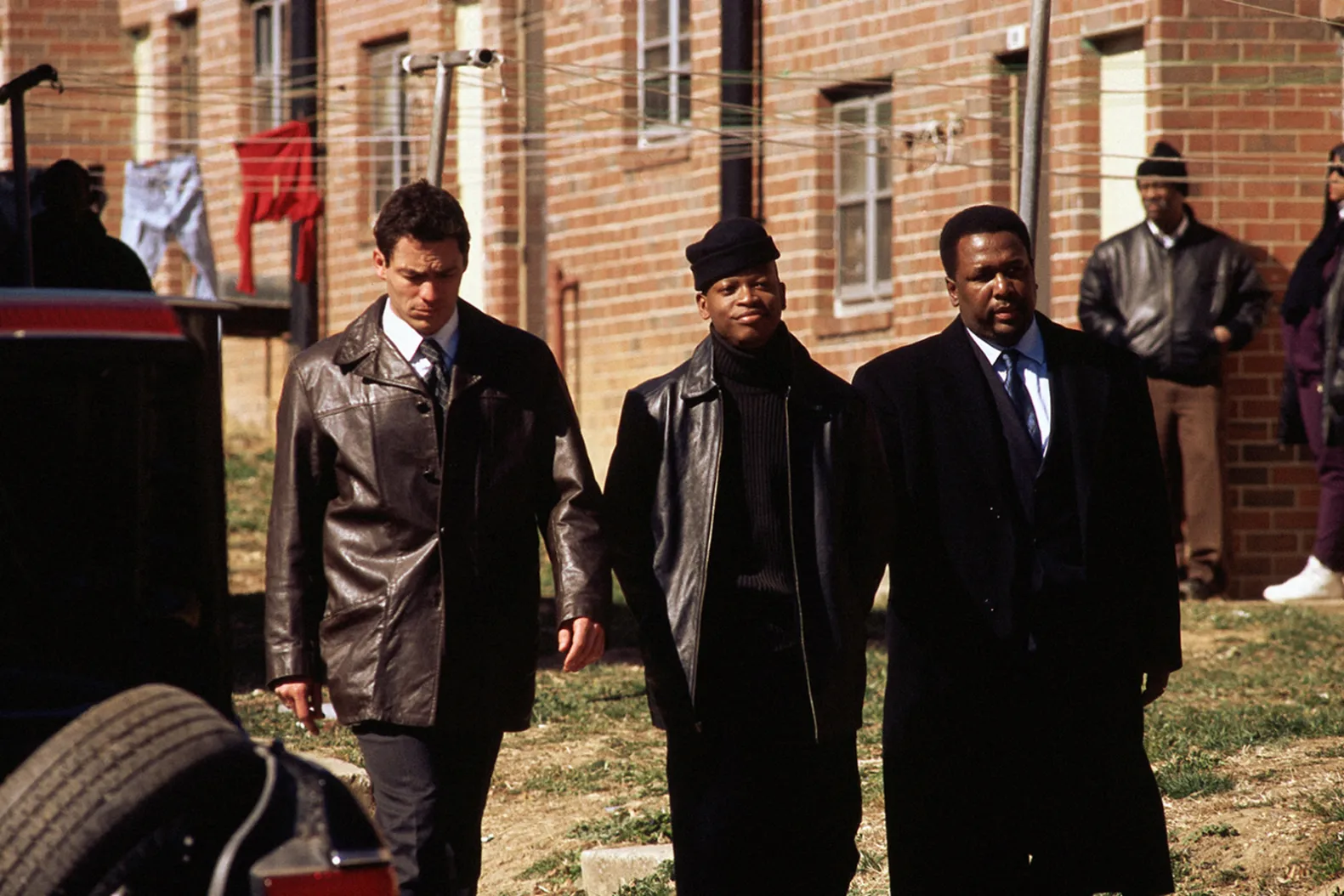
But, if 24 and The West Wing represented top-down narratives that translated into actual political agendas, The Wire brought viewers to the ground level, offering a panoramic view of the systems that failed America’s most marginalized communities in the deindustrialised, and politically forgotten inner-city. David Simon’s magnum opus is often hailed as a critique of the core US hegemonic institutions (the police, urban officialdom and the media), but it’s also a profound exploration of urban revanchist policies. i.e. the reclaiming of inner-city spaces through punitive governance and overly aggressive policing.
Set against the backdrop of Baltimore’s drug war, The Wire revealed the human toll of the carceral and surveillance state and the futility of policies driven by metrics rather than justice. The show’s portrayal of police corruption and bureaucratic inertia served as a scathing indictment of America’s post-9/11 domestic priorities, where the rhetoric of security extended seamlessly into the policing of Black and brown bodies in the city. Yet, amidst the bleakness, The Wire celebrated acts of minoritarian emancipation (as noted by the late, great Fredric Jameson) – small (and sometimes, very large and violent), defiant gestures of humanity against systems designed to dehumanize with intersectional queerness of some of the series main characters acting as further evidence of their willingness to subvert the dominant cultural narrative of the time. Whether through the tenacity of a schoolteacher, the resilience of a corner kid, or the show’s most notorious gun runner and ‘masculine’ star revealed to be gay, the show illuminated the ways in which people resist, adapt, and survive in the ‘real’ post-9/11 American social landscape.
The Triumvirate of Post-9/11 Ideologies
Together, these three shows form a cultural triptych that reflects the fractured ideological terrain of post-9/11 America, and which ones ‘won’ the hegemonic battle for the White House in the decades that followed. 24 channelled the anxieties of a nation at war, legitimizing militarism and surveillance as necessary evils leading to the inevitable conspiracies that gripped the nation. The West Wing offered a comforting (if glaringly neoliberal and just as nationalist and militaristic) vision of political centrism that Obama’s administration exemplified, where compromise and decorum reigned supreme. Meanwhile, The Wire perhaps the most realistic of them all, exposed the rot within America’s institutions, forcing viewers to confront the systemic inequalities that played out domestically during the so-called War on Terror in the Middle East.
In their own ways, each show grappled with the contradictions of American power in the 21st century. They remind us that the politics of a nation are not only forged in legislative chambers and courtrooms but also in the stories it tells about itself. And in the shadow of 9/11, those stories revealed a nation both united and divided: a nation searching for meaning in the rubble.
 taCity
Leave a comment