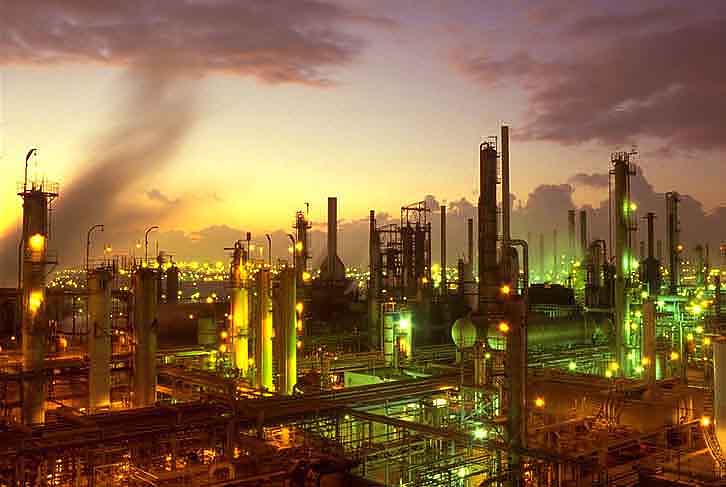
What I’ve found over the last few years, particularly as I’ve engaged with the lives of environmental activists through the now concluding OHEM project is that the continuing arch of the twenty-first century’s history will be inseparable from the politics of energy; in the broadest sense of the word. How we power our homes, workplaces, tech, infrastructures, cities, our lives, has always shaped – and is shaped by – how we ‘power’ our politics.
This is because the demise of democratic ideals; the metastasising neoliberalism of the twentieth century which has produced the malignancy of authoritarianism of the current conjuncture, has been characterised by similarly cancerous ways in which we’ve been powering our lives. Today, authoritarian figures – Putin, Trump, Netenyahu bin Salman and their ilk – continue to shape world affairs with a fossilised grip. We need only trace the veins of oil, coal, and gas that run in the strata beneath the territories they’d occupied to understand their politics. Fossil fuels have long been the hidden architecture of power: concentrated, territorial, extractive, and jealously guarded. They have given rise to a politics that mirrors their nature: centralised, brittle, and authoritarian.
Incidentally, it is no coincidence that so many of the world’s despots are not only reliant on fossil energy but are themselves, in a sense, fossils. Trump, Putin, Netanyahu, Salman bin Abdulaziz: octogenarians (or at least looking to be in power until they become an octogenarian), clinging to dead ideologies and calcified worldviews. Like the sedimentation of dead organisms that create the black gold they so crave, their lives are a sedimentation of dead ideologies layered over time by the continual immersion in networks of hate, greed, ego, deference and lobbying politics. Furthermore, the pirates of fossil capitalism feed this with their capital; flooding the corridors of power with their lobbied toxins. The political imagination of these enmeshed networks of aging patriarchs is so stunted to be steeped in the industrial logic of the twentieth century: ever more extraction, ever more control, ever more zero-sum geopolitics. It is any wonder that the toddler-in-chief’s rallying cry was a childish and crass as his personality: ‘drill, baby, drill’.
Like the fuels they champion, their power is non-regenerative: these aging planetary carcinomas can only grow by destroying what they inhabit. Their political power is sustained by finite reserves of manufactured legitimacy, sycophantic devotees, and cultural nostalgia. Fossil fuels, fossil capitalism and fossiled politicians: they are all past their peak, yet refuse to acknowledge decline.
The infrastructures of fossil capitalism explains this overlap. Oil wells, coal mines, and gas pipelines are geographically fixed and capital-intensive. They demand the centralisation of infrastructure and capital, the exploitation of workers, the expulsion of indigenous peoples, the violent protection of territory, and, if these locations have the temerity to be under foreign soil, the mobilisation of military power. Control over energy resources has consistently translated into control over populations, and by extension, over the global order. This is why fossil-fuelled regimes, whether petro-monarchies, energy-rich kleptocracies, or industrial powers, will always bend towards authoritarianism. The logic of extraction is also the logic of domination.

But the dawn of renewable and regenerative energy is coming. Unlike fossil fuels, solar and wind are not tied to particular geographies or easily monopolised. The sun shines everywhere and is radically abundant; the wind blows across borders and oceans. Even rivers and the hydropower they produce, which are perhaps more fixed, still flow across entire regions. Renewable energy is diffuse, abundant, and, hence, democratisable. Communities, households, and cooperatives can generate power without submitting to centralised authorities. Energy, in this twenty first century paradigm, no longer has to be controlled from above by aging fossils, it can emerge laterally, in networks, microgrids, and shared infrastructures that pay no attention to geopolitics: an energy commons.
The political implications of this shift are profound. If fossil fuels equal authoritarianism, renewables gestate democracy. Energy sovereignty can be redistributed, just as political sovereignty can be reclaimed. Imagine a world in which towns and neighbourhoods manage their own power generation, insulated from the geopolitical chokeholds of gas pipelines or the rentier politics of oil states. The very materiality of renewables fosters decentralisation, collaboration, and resilience. This is not to suggest that renewables will automatically dissolve authoritarianism. China, for all its massive gains in solar and renewable energy production over the last few years, is still a geopolitical power with hegemonic tendencies. Capital can still colonise solar fields and wind farms; corporations can still monopolise supply chains. But the potential for democratisation is structurally embedded in renewables in a way that it never was in fossil fuels. As the voices from the OHEM project have shouted loud and clear, to seize it requires political will, social movements, and new institutions that align with the decentralised character of the energy itself.
The deeper lesson of fossil politics is therefore twofold. First, fossil fuels have entrenched an authoritarian order, both materially and generationally. They have produced leaders and networks of power that embody the same characteristics as their energy sources: concentrated, finite, and ageing. Second, the transition to renewables is not just an environmental or economic imperative but a political one. To break with fossil fuels is to break with fossilised politics; to embrace renewables is to embrace the possibility of renewable democracy. Ultimately, the question is not just about carbon but about power: who generates it, who controls it, and how it flows. If we allow energy to be monopolised, our politics will remain fossilised. If we democratise it, we might finally renew our politics too.
 taCity
Leave a comment