01-04 September 2026, London
Session Organizers: Oli Mould (Royal Holloway, University of London), Hanxi Wang (University College London)
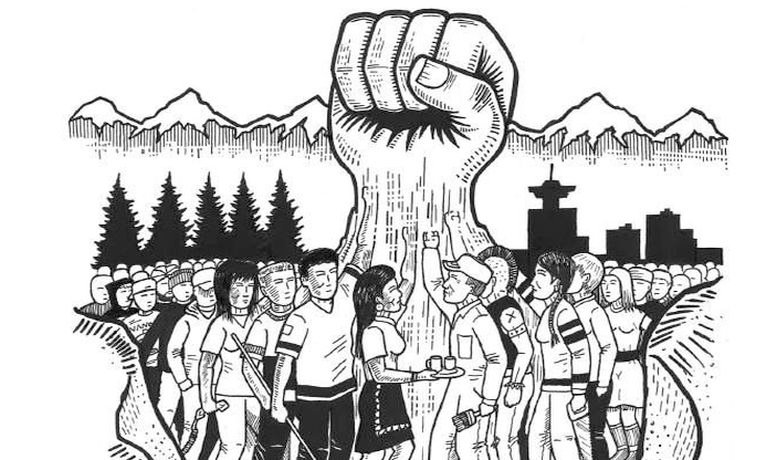
In Multitude (2004), political philosophers Michael Hardt and Antonio Negri proposed the possibility of the “multitude” as a “living alternative” that grows from within the biopolitical production of shared knowledges, relationships, sentiments, and collaborations that facilitates globalized networks of capitalism. Unlike political units of “the people,” “the masses”, and “the classes” which signify the possibility of organized collective action based on commonality (of race, history, economic status etc.), the “multitude” is constituted through difference; an elusive, unpredictable and fundamentally ungovernable collective of singularities that may synchronize temporarily for specific goals or movements (cultural, social, political or otherwise), but without ever becoming fully unified and/or articulable.
Twenty years later, the world facilitated by globalized networks like social media is ever more complex than when they wrote this book. At the same time as people across the world have become intensely connected, the world has also become fragmented by political polarization, identity politics, and growing social isolation. Yet, the conceptualization of the “multitude” still resonates with geographical scholarship over the last two decades that has questioned conventional understandings of social movements and drawn attention to relational, affective, and improvised forms of solidarity produced through everyday practices and encounters (Amin, 2004; Bayat, 2013; Featherstone, 2008; Simone and Rao, 2012).
This session invites theoretical, empirical and methodological interventions that explore unconventional, fragile and often overlooked geographies of solidarity that fall outside established frameworks of social movements, activism, or institutional politics, yet permeate everyday life in subtle and unexpected ways (Neimanis and Walker, 2014; Tsing, 2015).
Contributions may be hyper-local or planetary in scope and may include (but not limited to):
- ephemeral moments of coordinated action
- fleeting alliances across difference
- mutual aid networks post-crisis
- (sub)cultural events and genres
- unstable or ambivalent partnerships across human and non-human actors
- solidarities that emerge without shared identity, ideology, or long-term commitment
If you are interested in participating in the session, please submit abstracts of 250 words along with your name, contact address, and institutional affiliation by to Oli Mould (oli.mould@rhul.ac.uk) and Hanxi Wang (hanxi.wang.22@ucl.ac.uk) by Sunday, 22 February 2026. Please note that we plan for the session to be held in-person, but with flexibility for hybrid if needed.
 taCity
Leave a comment