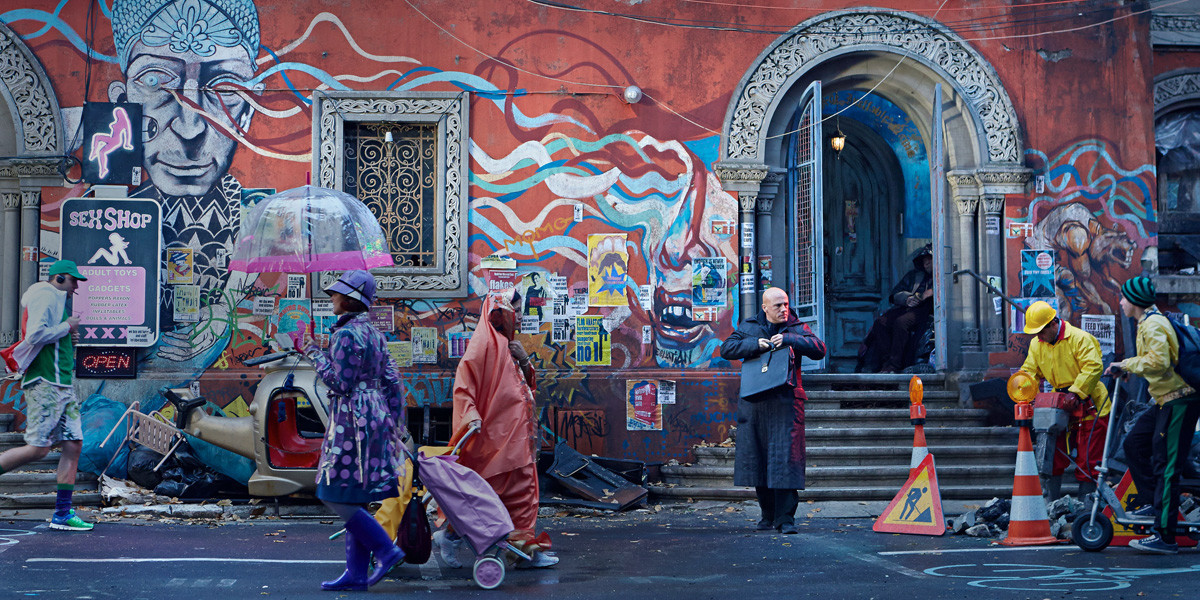
I recently came across the term ‘bubblegum dystopia’ (this video explains that it comes from a quip about Terry Gilliam’s 2014 film The Zero Theorem) and oh yes, it’s a *chefs kiss* description of the current conjuncture of late-stage palliative capitalism we find ourselves in…
Because while the world boils, the fash are back out in force, and the US is slowing descending into Gilead, the sheen of consumerism is a vivid simulacrum sedating us all as it turns ‘reality’ into another media to consume.
Bubblegum dystopia perfectly captures the vibrant yet achingly vacuous aesthetic (after all, bubblegum is totally ineffective as form of consumption) that dominates our media and popular culture, reflecting the contradictions and catastrophes inherent in capitalism. In our bubblegum dystopia, the surface is endlessly appealing, even as we’re totally aware it conceals our demise and sells the end of the world back to us.
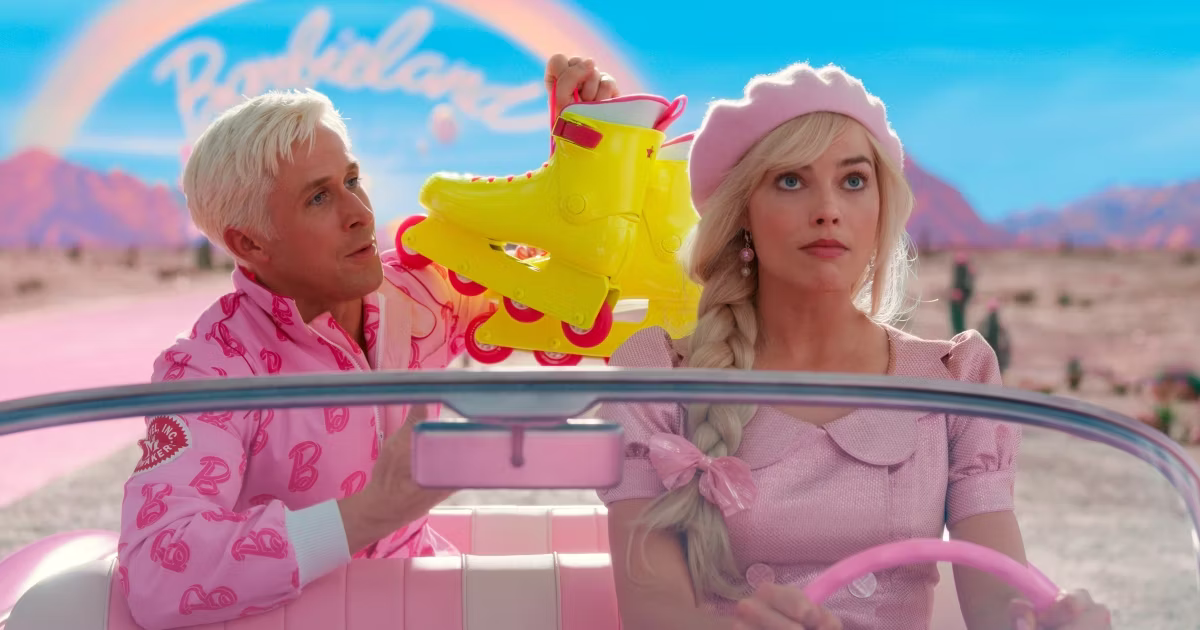
In this world, media and consumer goods are designed to be instantly gratifying but ultimately hollow. From the endless scroll of social media feeds filled with clickbait content to the proliferation of reality TV shows that offer spectacle without substance, our entertainment landscape is an infinite kaleidoscope of fractalized distractions. Even films that are overtly smashing the patriarchy (like the recent outing of Barblie), they can’t escape the soft colour pallete designed to paper over the gaping wounds of the capitalist-shaped hole in our heads. The visual aeshethics of this bubblegum dystopia are characterized by a hyper-saturated, cartoonish aesthetic that belies its underlying darkness (if you’ve ever bought a ‘craft’ beer recently you’ll know about all this kind of infantilisation of marketing).

But have a we choice, right? RIGHT? Late-stage capitalism prides itself on the diversity of products and experiences available to the consumer. But this copious abundance is actually nothing but consumptive homogeneity. The choices presented to us are shaped by the imperatives of market logic, which prioritizes profit over genuine diversity or innovation. Marvel can’t even find a new actor for Doctor Doom for crying out loud (and the less said about that ridiculous 2-hour long series of unnconnected memes, counter-memes and internet fan reaction videos abomination Deadpool and Wolverine, the better).
This illusion extends to our digital selves. The algorithms that govern our online experiences create nasty echo chambers, reinforcing our existing preferences and limiting our exposure to different perspectives, and fuels online hate that spills out onto the streets.
We chew and chew and chew, until the flavour is gone, and then we just simply replace it with another.
But the neon colours, retro-futuristic motifs, and playful imagery are juxtaposed with themes of decay and disillusionment (The Zero Theorum does this very well indeed). This aesthetic reflects a world where the veneer of prosperity and happiness is increasingly thin, barely covering the cracks of economic inequality, environmental degradation, and social fragmentation.
In this universe of bubblegum dystopian media, this aesthetic manifests in works that blend the fantastical with the grotesque. The Zero Theorem has probably gone unnoticed, but certainly Black Mirror, The Boys and many others depict worlds that are simultaneously exaggerated and disturbingly familiar, highlighting the absurdities and horrors of our own society, but then reflect them back to us for profit. Even in ostensibly light-hearted media, there is often an unnerving undercurrent of cynicism, a recognition that the promised utopia of endless consumption is a mirage.
How to navigate this bubblegum dystopia? Well, it’s easy; in theory. Just take a leaf out of Marxist critic of culture and cultivate a critical awareness of the forces at play (namely neoliberal capitalism and techno-feudalism). This means recognizing the ways in which our consumption habits are shaped by broader economic and political structures, and striving to make choices that align with the values we want to see, rather than simply following the path of least resistance. Being analogue would help as well. Engage with materiality and psychedelia. Basically, anything that ‘lifts the veil’. Beyond that, revolution I guess? I dunno, I’m bored.
Or we can take a leaf out of Nada’s book from ‘They Live’ when he said….
 taCity
Leave a comment