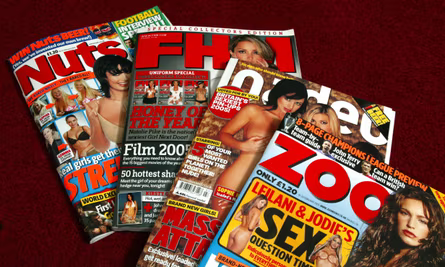
Like any teenage boy with his hormones raging, I admit to there being the odd poster of Jennifer Aniston on my bedroom wall alongside Pearl Jam, Faith No More and Duncan Ferguson. I was a child of the 90s, so of course I was exposed to the ‘lads mag’ culture that was so pervasive among my peers. They were gateways to adolescence, windows into the weird and scary world of sexually active manhood, and the scaffolding for a male gaze that foregrounded not only the toxicity of future social masculine subjectification, but the need for yet further iterations of feminist action.
1994 saw the launch of the first lads’ mag, Loaded, swiftly followed by FHM, Maxim then the more tabloid-y versions of Nuts and Zoo. Their physical manifestations have long become cultural relics, but their cultural ghost endures. The hyper-masculine ideals they vociferously promoted still shape peer groups, institutional norms, and even broader societal values. The persistence of this cultural legacy is not merely a vestige of the past but in a hauntological, Fisherian motif, a reflection of the how the neoliberal apotheosis that the 1990s ushered in, still has a pervasive grip on the contemporary culture of the 2020s.
First, it is clear that the lads’ mag culture played a significant role in shaping a particular vision of masculinity that thrived on irreverence, hedonism, and a resistance to feminist advances via a direct objectification of women (but of only those who were white, Western and ‘classically’ beautiful). The magazines promoted a caricature of the modern man: someone disinterested in the progressive politics of gender equality of third wave feminism, and determined to maintain traditional male privilege through ‘locker room’ humour, sexual objectification, and casual misogyny. The ‘lad’ of the 90s represented a backlash against feminism, positioning itself as a celebration of carefree masculinity in a world becoming increasingly concerned with political correctness and gender parity.
At the heart of lads’ mag culture was the normalization of toxic masculinity: a set of harmful behaviours and attitudes that valorised dominance, sexual conquest, emotional detachment, physical strength and often racist stereotypes. Through depictions of scantily clad women, racist knob jokes, sexist and ableist jibes, and narratives that celebrated male excess (often based in alcohol consumption), these magazines cultivated a culture in which men were encouraged to perform a masculinity that was exclusionary and harmful to others, but particularly to women. The lads’ mag ethos was not just about fun and escapism with a Nathan Barley aesthetic; it actively reinforced a patriarchal worldview that legitimized male entitlement and trivialized the very real and responsive feminist critiques.
But of course, that culture has dissipated with the materiality of the magazines themselves, right? I’m not so sure. The toxic masculinity that lads’ mags nurtured can still be felt within the peer groups and social interactions of today. Men who came of age during the 1990s (and are now well into their 40s, fathers and often with professional careers and massive amounts of social and/or economic power) still perform masculinity in ways that reflect these harmful ideals albeit perhaps with more subtlety and caution. Whether through ‘banter’ that diminishes women’s autonomy or the devaluation of emotional expression among men, these behaviours can be traced directly to the laddish attitudes that were once celebrated in print but have now migrated to WhatsApp groups and social media comments; and their link to the dangerous epidemic of male suicide cannot be understated.
And the toxic masculinity promoted by lads’ mags did not remain confined to private peer groups or personal interactions. We’ve all grown up and so arguably its seeped into public institutions, reinforcing existing patriarchal tendencies despite the gains made by women and intersectional justice movements. From corporate boardrooms, political parties, the police, educational systems, institutional cultures have often mirrored the same gender dynamics seen in lads’ mag culture. We still have a yawning gender pay gap, sexual harassment scandals, the underrepresentation of women in leadership roles, and police murdering lone women in parks.
I’m reticent to draw a direct causal link between lad’s mag culture and the current pervasiveness of patriarchal violence, after all, women have been subject to male violence throughout history and so why should the last 30-odd years be particularly special? Well possibly because there is a general sense that 90s culture haunts the present culturally and politically, and so it wouldn’t be too much of a stretch to suggest that this haunting covers our constructions of masculinity as well.
That’s because in the 1990s, as Mark Fisher so eloquently articulates, neoliberalism became the dominant economic and political ideology in the West, and it was accompanied by a parallel cultural shift that prioritized individualism, competition, and personal freedom over collective responsibility and social justice. Neoliberalism’s emphasis on market logic also extended to the cultural sphere, commodifying everything from sexualized images of women to the idea of ‘masculinity; itself. In this context, lads’ mags functioned not only as purveyors of entertainment but also as tools of neoliberalism and capitalist realism, reinforcing a competitive, aggressive, consumer-driven masculinity that fit seamlessly into the broader capitalist order.
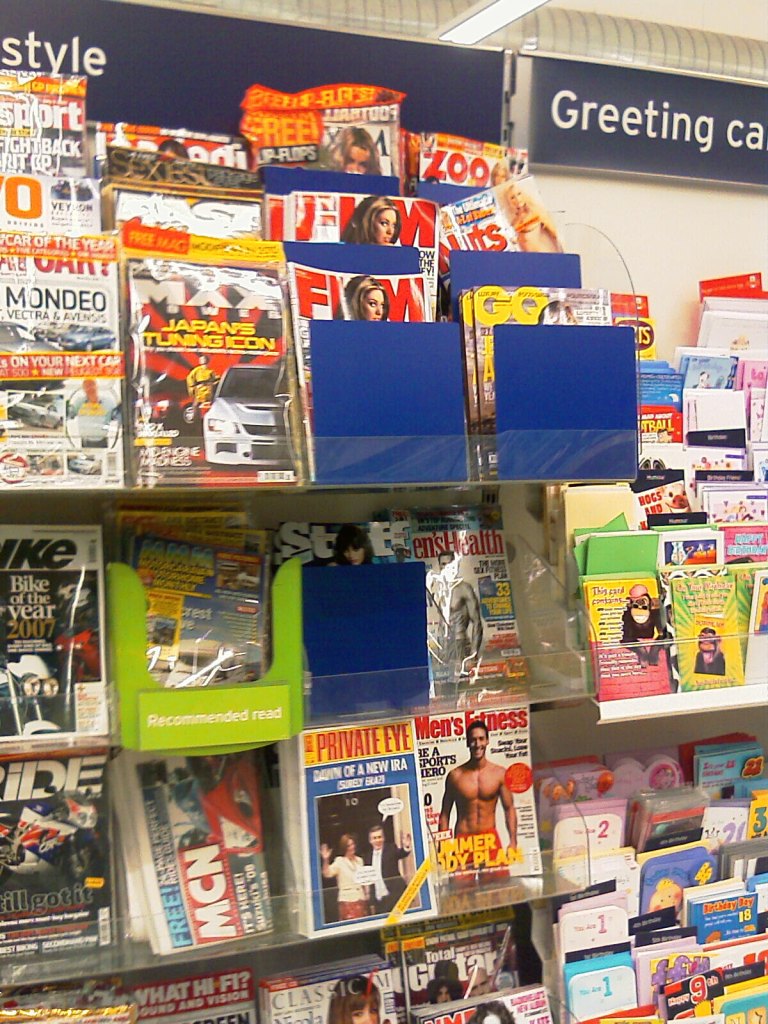
As such, the persistence of these behaviours demonstrates the continuing need for feminist interventions to dismantle these harmful norms; the same kind that developed at the time in direct relation to them. Because while significant progress has been made since the 1990s – from legislative advances in gender equality to the rise of movements like #MeToo – the persistence of harmful gender norms demonstrates that feminism’s work is far from complete. Feminist critiques of lads’ mag culture in the 1990s focused on the objectification of women, the normalization of sexual violence, and the reinforcement of gender hierarchies. The third wave feminist movement of the 90s sought to incorporate intersectional justice into female empowerment, with Kimberlé Crenshaw’s work of particular importance in understanding how racial, queer and crip cultures affected and changed feminist activism. Furthermore, the ‘ladettes’ culture sprang up in relation to these lad’s mags, where women would match the men toe-to-toe with their social transgressions. But as the comedian Shaparak Khorsandi notes, “we thought we were taking power back by making ourselves very ill with booze and selling ourselves short when we went out. The men do it, so should we! But what we didn’t have, which my son’s generation has, was the notion of self-care.”
Hence, today, feminist action in the 2020s is confront not only the remnants of 1990s lads’ mag culture but also the new ways in which toxic masculinity manifests in men and women. Online spaces such as social media platforms, forums like Reddit, and gaming communities have become new battlegrounds where misogyny flourishes and women are subjugated. The same laddish humour, casual sexism, and dehumanization of women that once filled the pages of lads’ mags now proliferate in these spaces, often under the guise of irony, banter or free speech (not helped by actual American Presidents uttering misogynistic tropes whenever he feels like it).
In this sense, feminist action today has a dual focus: addressing both the legacy of 1990s cultural formations and its contemporary manifestations in the digital age. Because for me, the obdurate haunting of lads’ mag culture, and the need for continued feminist action to combat it, can be understood within the broader context of neoliberalism’s cultural legacy. The 1990s represented a moment of neoliberal apotheosis when market-driven logic and individualism reached the apex of cultural, social and economic dominance.
As I have written elsewhere (and seem to be noticing more and more), the 2020s has a spectre of this neoliberal apotheosis haunting our culture, and lad’s mags are part of that. Our task then as feminist and related allies is not only to critique these harmful gender norms but to envision and promote alternative forms of masculinity that are rooted in equality, empathy, care, and collective responsibility.
 taCity
Leave a comment